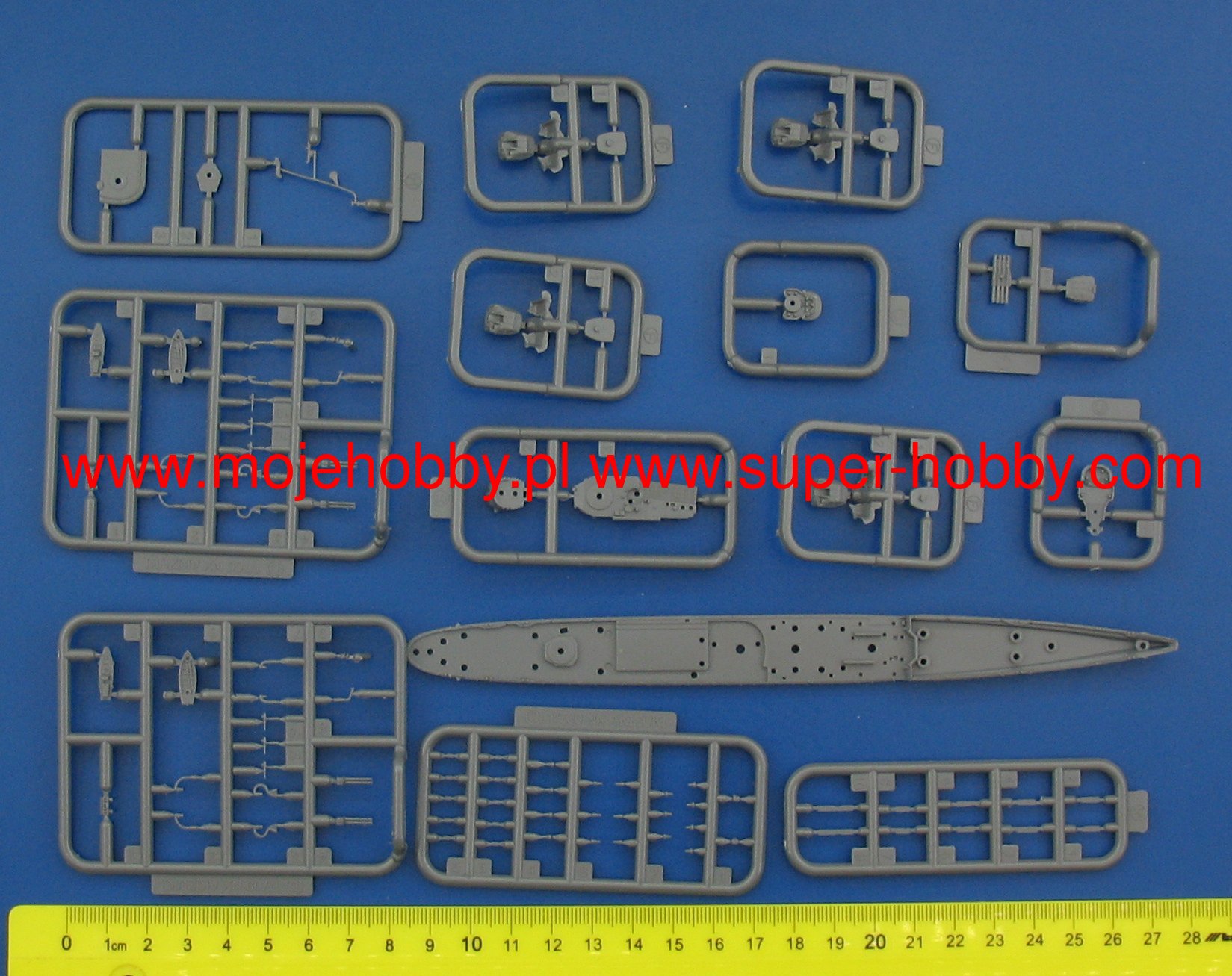
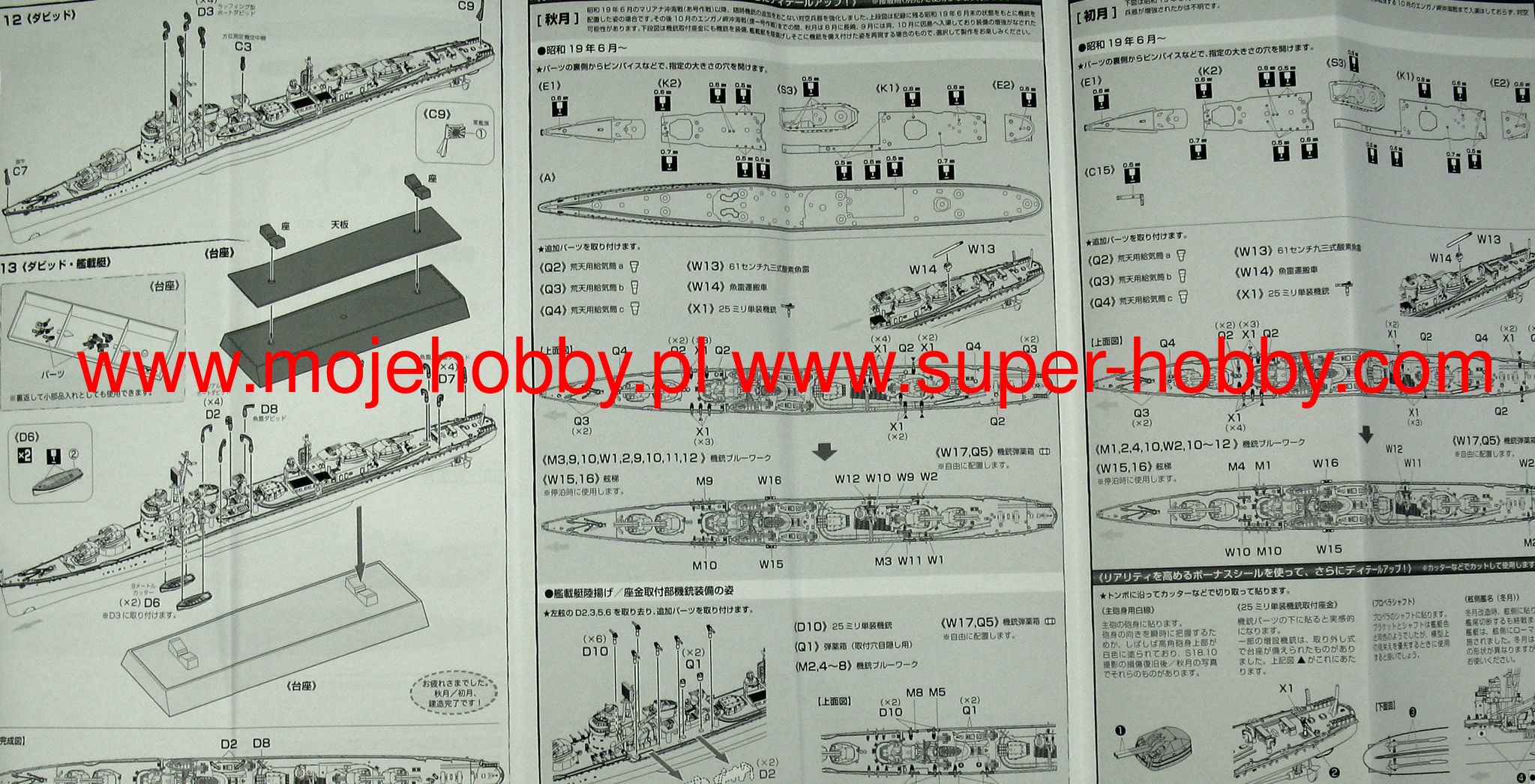
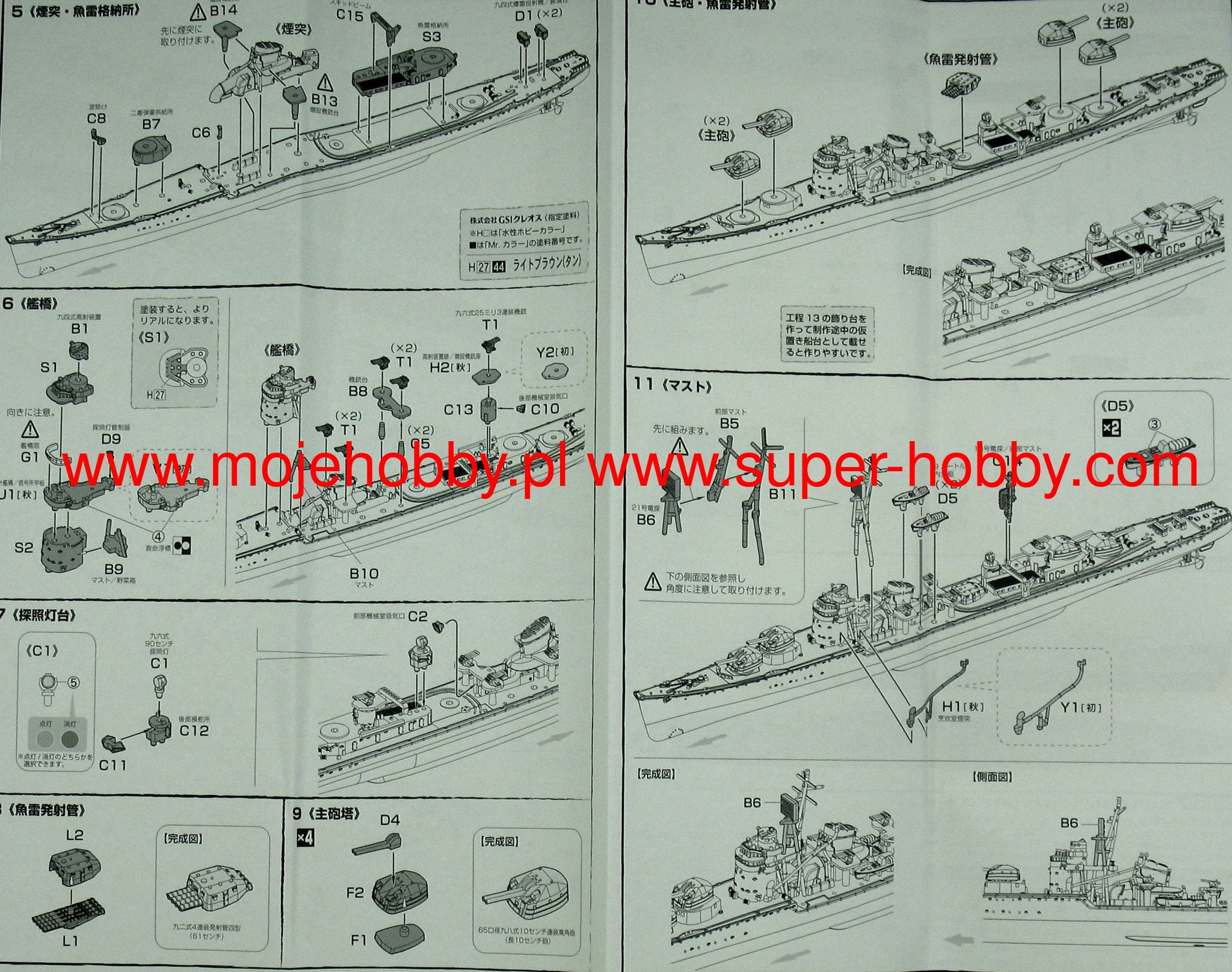
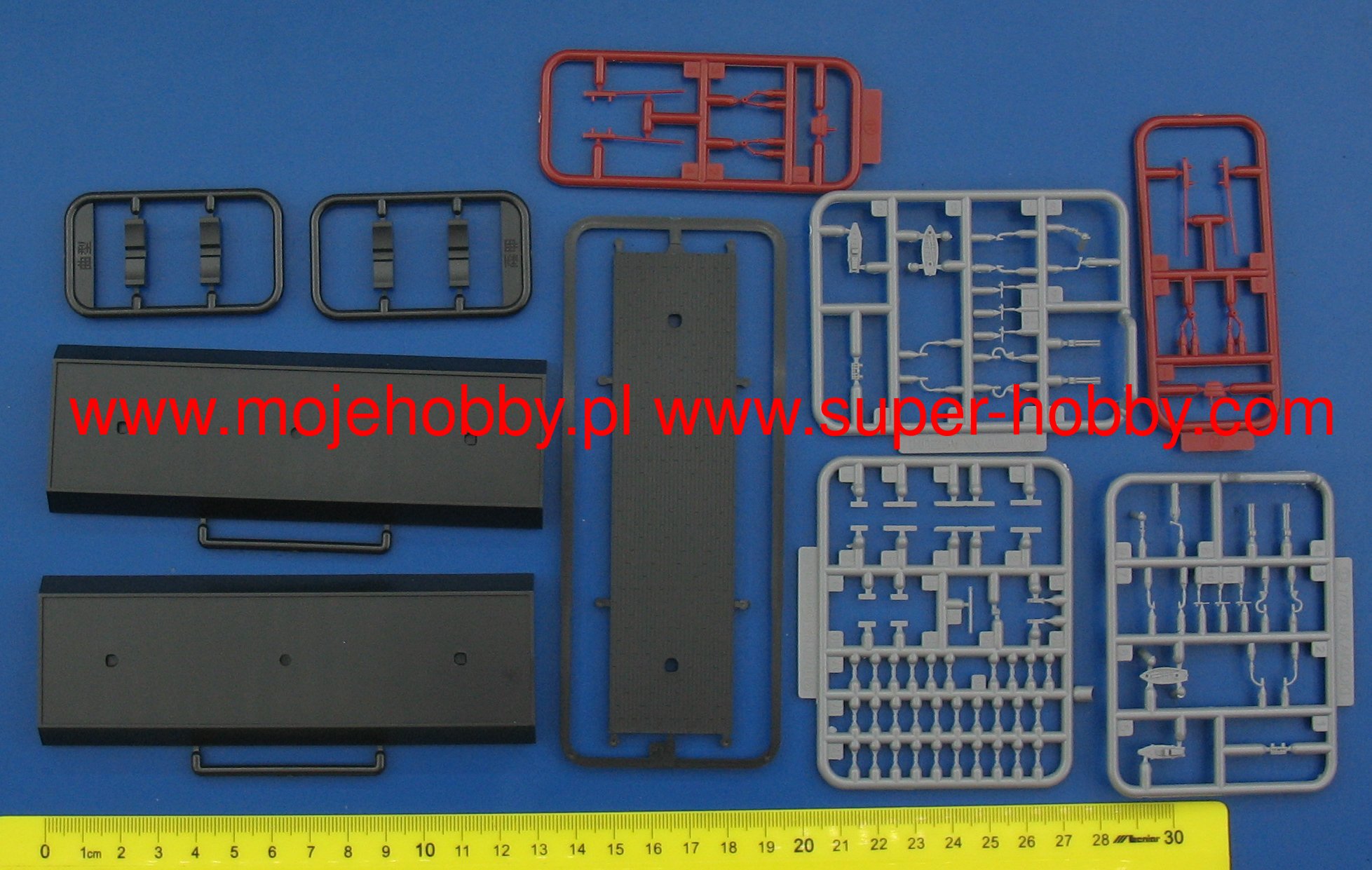
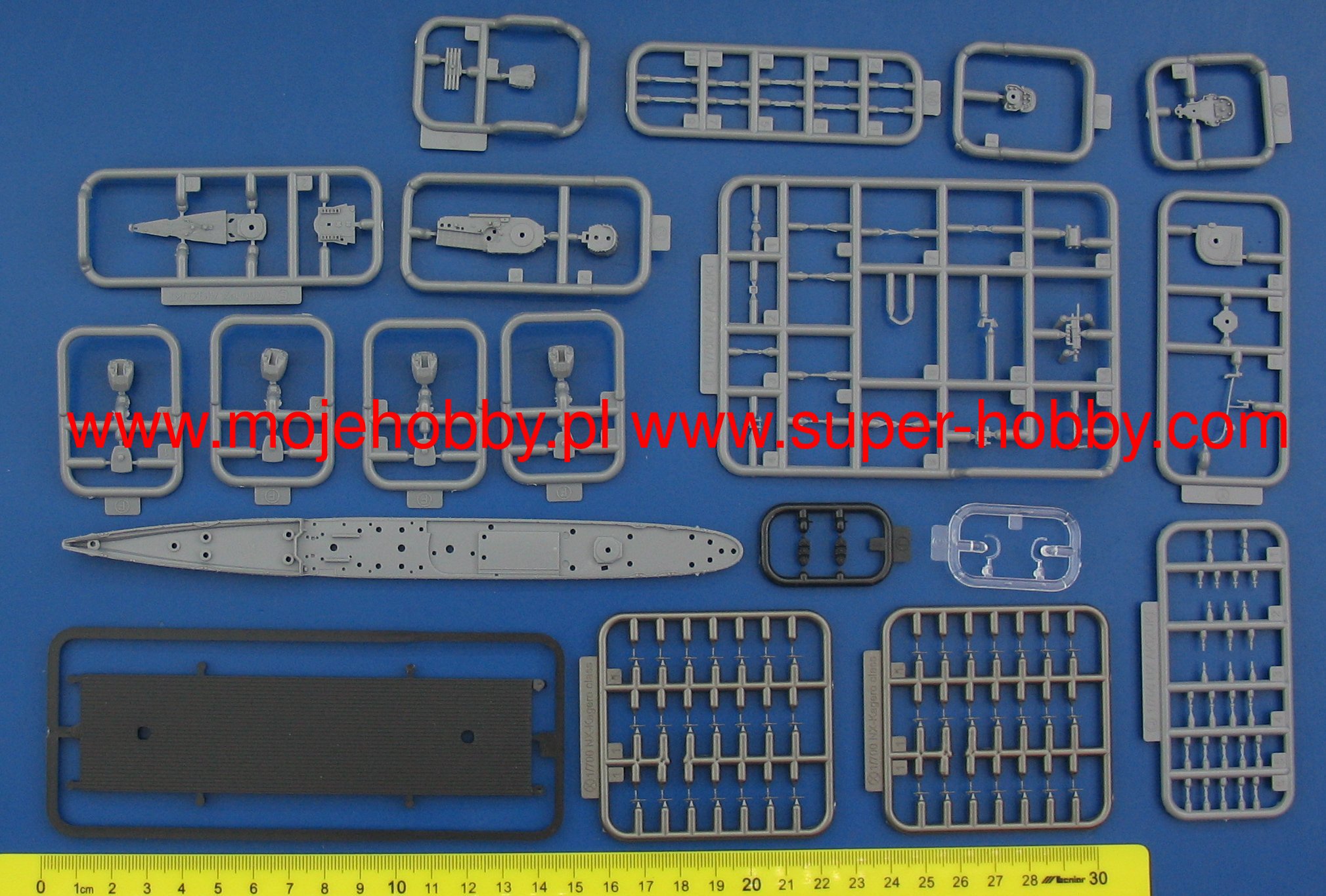
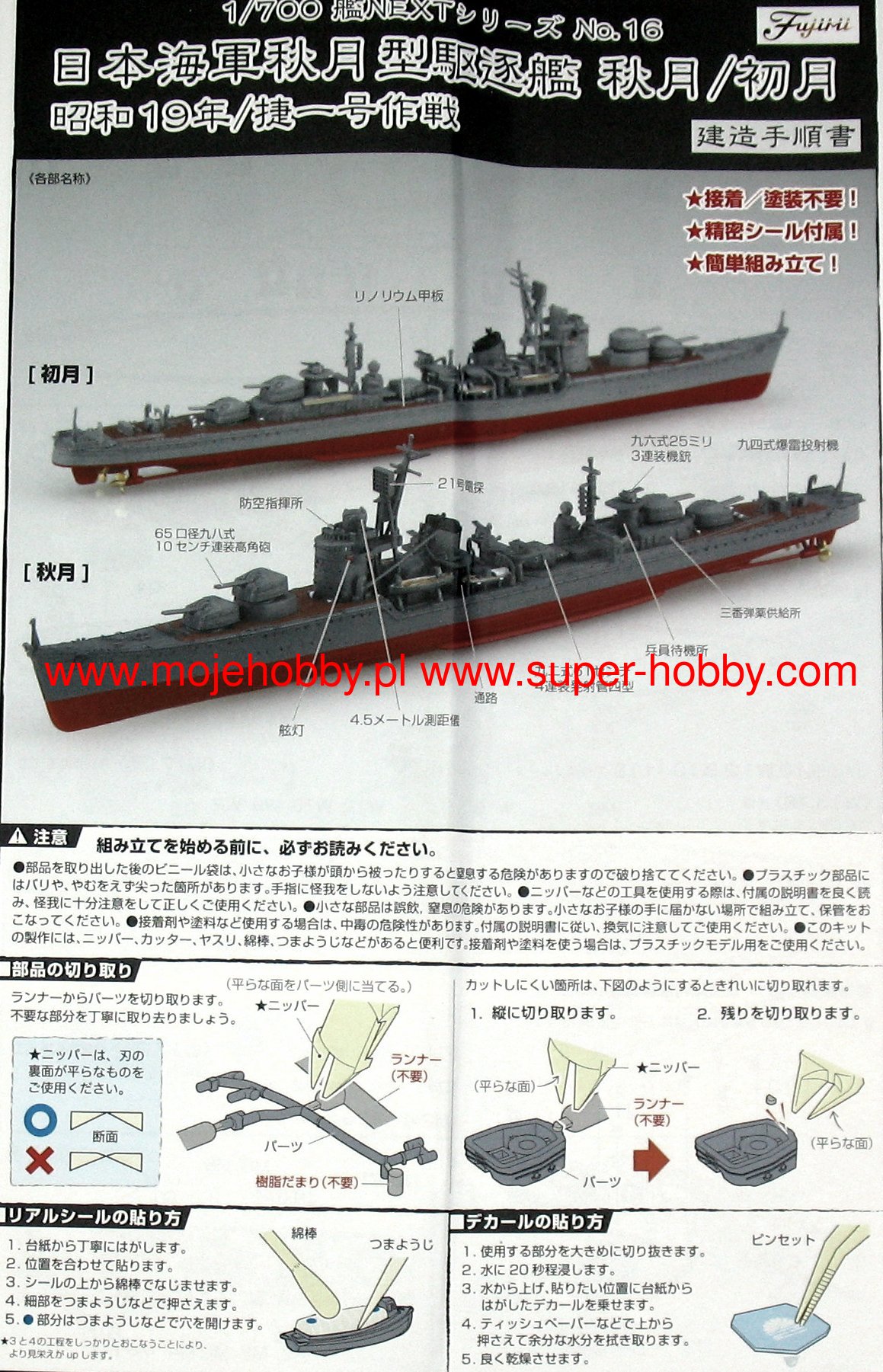
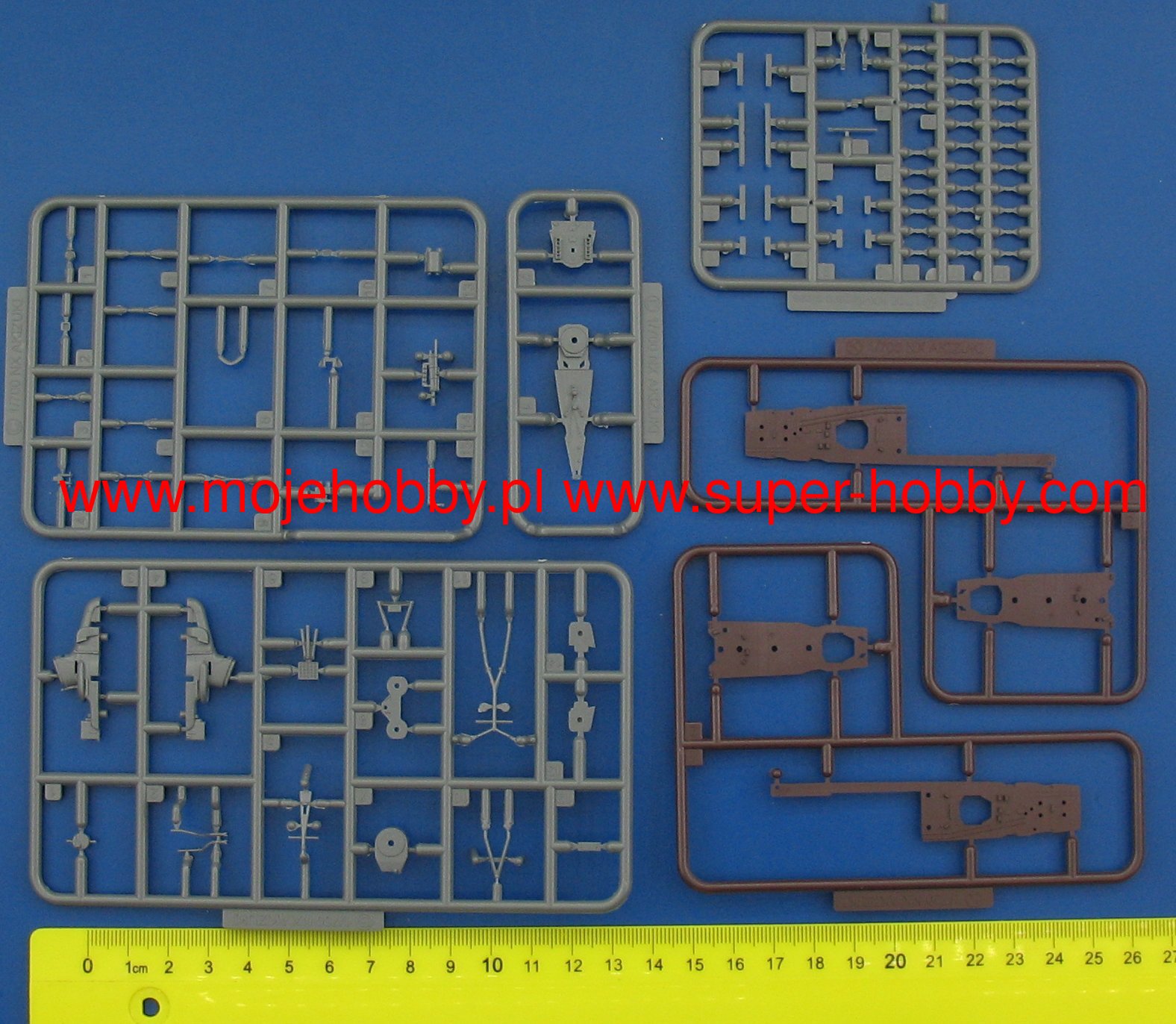
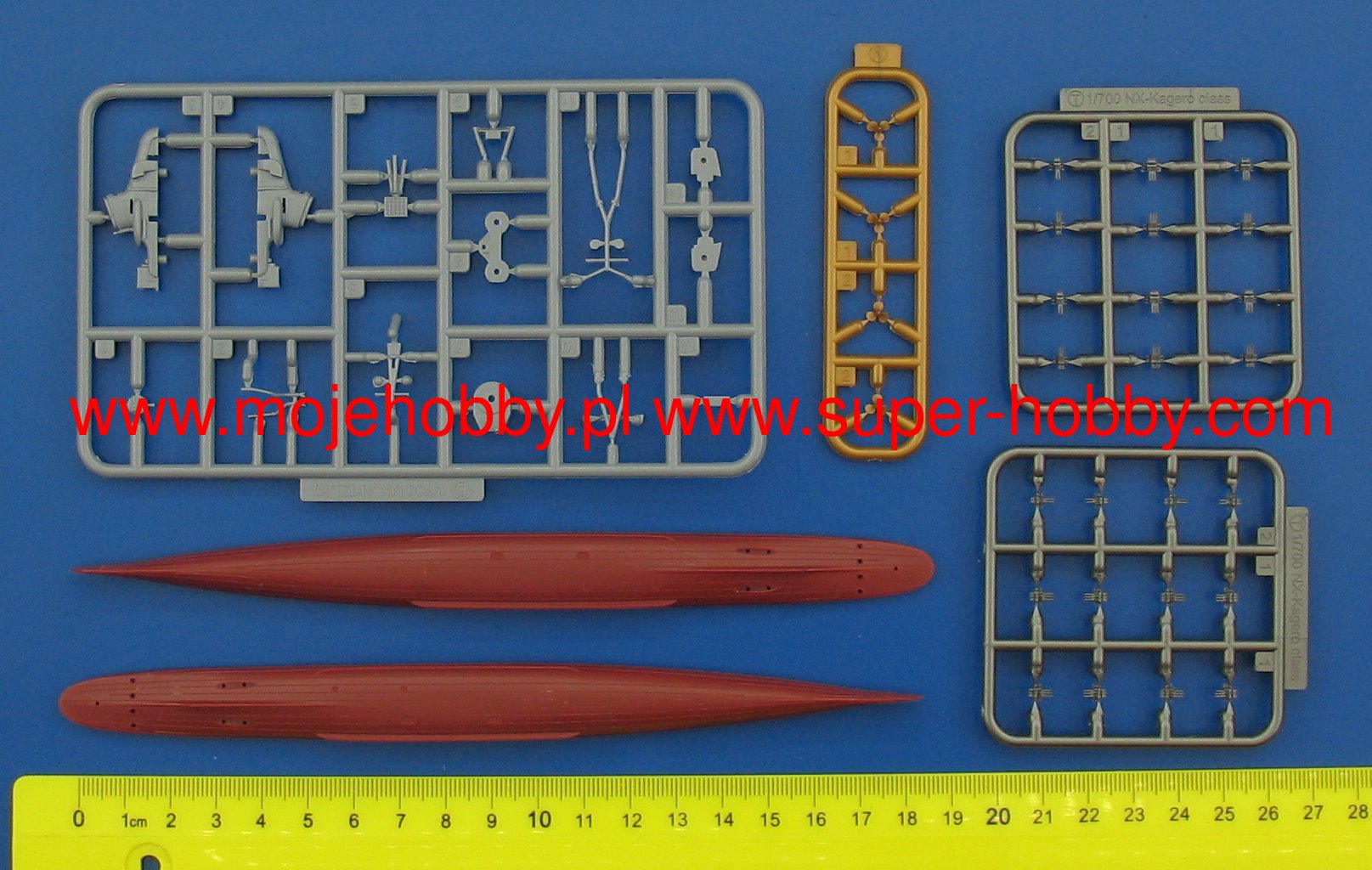
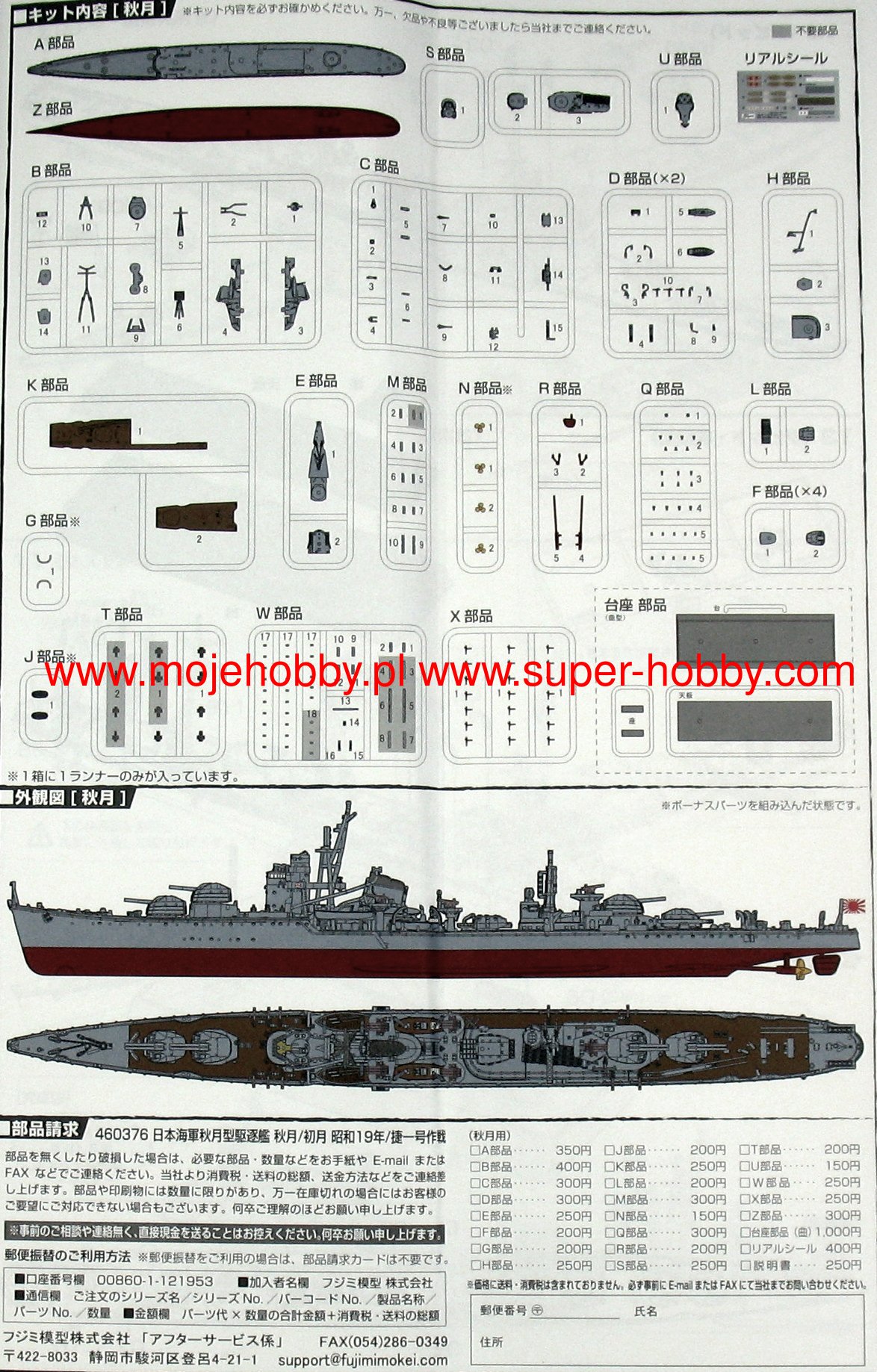
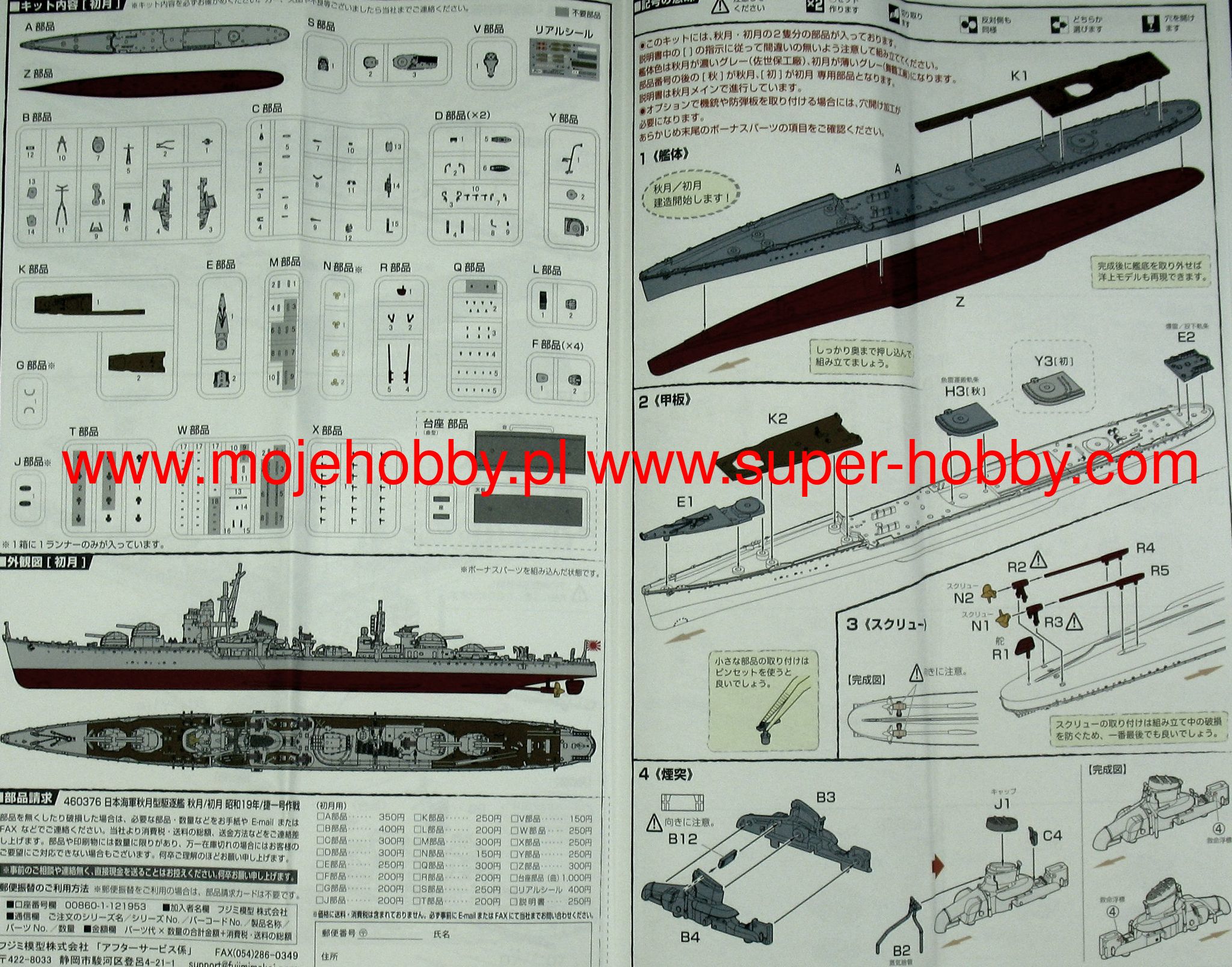
Hatsuzuki was a Japanese destroyer whose keel was laid in 1941, launched in April 1942, and commissioned in the Imperial Japanese Navy in December 1942. The length of the ship at the time of launching was 134.2 m, width 11.6 m, and the actual full displacement - 3,700 tons. Destroyer Hatsuzuki's maximum speed was up to 33 knots. The main armament at the time of the launch was 8 100 mm guns in four twin turrets, and the secondary armament was 4 25 mm cannons, depth charge launchers and four 610 mm torpedo tubes. Hatsuzuki was the fourth Akizuki class destroyer. Destroyers of this type were designed as anti-aircraft destroyers, intended to protect high-speed Japanese aircraft carriers, which resulted in the arming with 100 mm universal artillery and weak - by Japanese standards - torpedo armament. Initially, 55 ships of this type were planned to be launched, but due to problems with the supply of raw materials, only 12 Akizuki-class destroyers entered service. However, they received very positive reviews due to their long range, high speed, good stability and sea prowess. They were considered to be one of the best destroyers of World War II. Hatsuzuki (side number 107) immediately after entering the line served as a cover for aircraft carriers Hiyo and Junyo. It served temporarily in May-July 1943 in its home waters, but was quickly diverted to operations in the Southeast Pacific. Like his twin Suzutsuki, he spent most of 1943 in convoy service in the waters surrounding the Truk and Rabaul bases. In 1944, Hatsuzuki was engaged several times to cover Japanese aircraft carriers and entered the Battle of the Philippine Sea in this capacity (June 1944). Shortly thereafter, in October 1944, she fought in the Battle of Leyte Bay as flagship of the 61st Destroyer Squadron, where she was sunk on October 25, 1944.Akizuki was a Japanese destroyer whose keel was laid in 1940, launched in July 1941, and commissioned in the Imperial Japanese Navy in June 1942. The length of the ship at the time of launching was 134.2 m, width 11.6 m, and the actual full displacement - 3,700 tons. Destroyer Akizuki's maximum speed was up to 33 knots. The main armament at the time of the launch was 8 100 mm guns in four twin turrets, and the secondary armament were 25 mm cannons, depth charge launchers and four 610 mm torpedo tubes. Akizuki was the first destroyer of the type with the same name - ie Akizuki. Destroyers of this type were designed as anti-aircraft destroyers, intended to protect high-speed Japanese aircraft carriers, which resulted in the arming with 100 mm universal artillery and weak - by Japanese standards - torpedo armament. Initially, 55 ships of this type were planned to be launched, but due to problems with the supply of raw materials, only 12 Akizuki-class destroyers entered service. However, they received very positive reviews due to their long range, high speed, good stability and sea prowess. They were considered to be one of the best destroyers of World War II. Destroyer Akizuki (side number 104) fought in the Aleutian region in June 1942 after entering service. In August of the same year he fought near the Solomon Islands. For the remainder of 1942, he protected convoys going to and from Guadalcanal, constituting an important element of the so-called Tokyo Express. During this process, he took part in the battle near Cape Esperance (October 1942). In 1943, he performed mainly convoy functions. Akizuki in June 1944 took part in the Battle of the Philippine Sea, and in October of the same year - in the Battle of Leyte Bay. During this battle, he was sunk on October 25, 1944.

 Обязательно посетите этот сайт, там найдется много всего интересного.