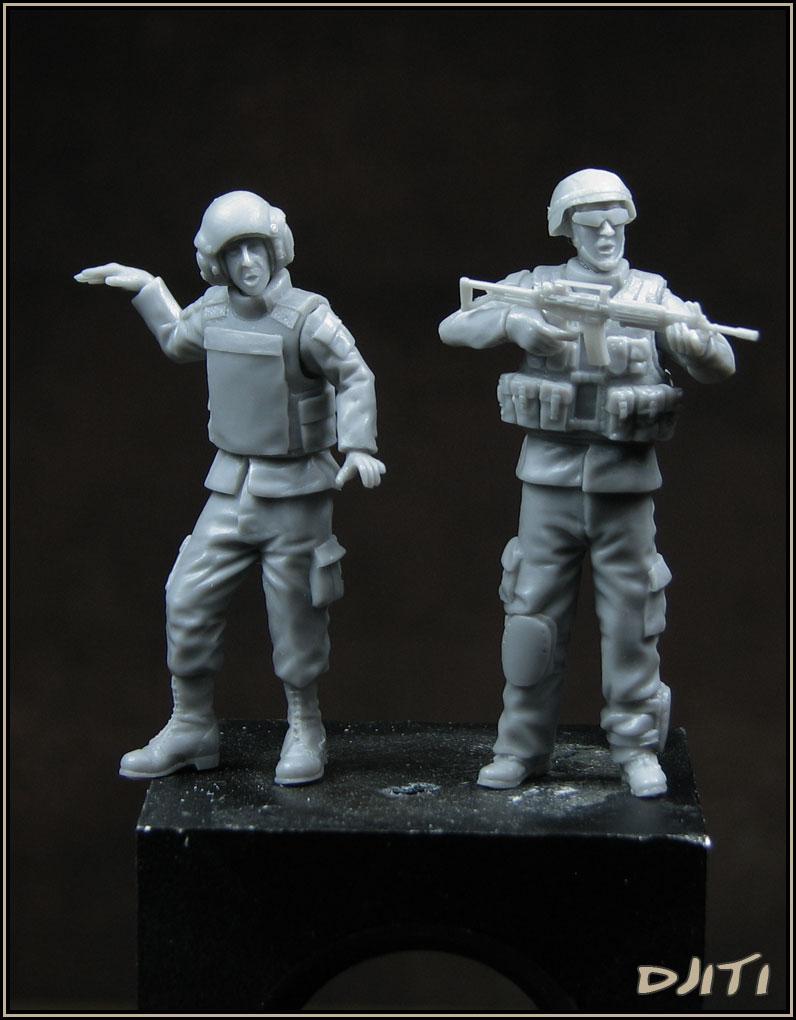
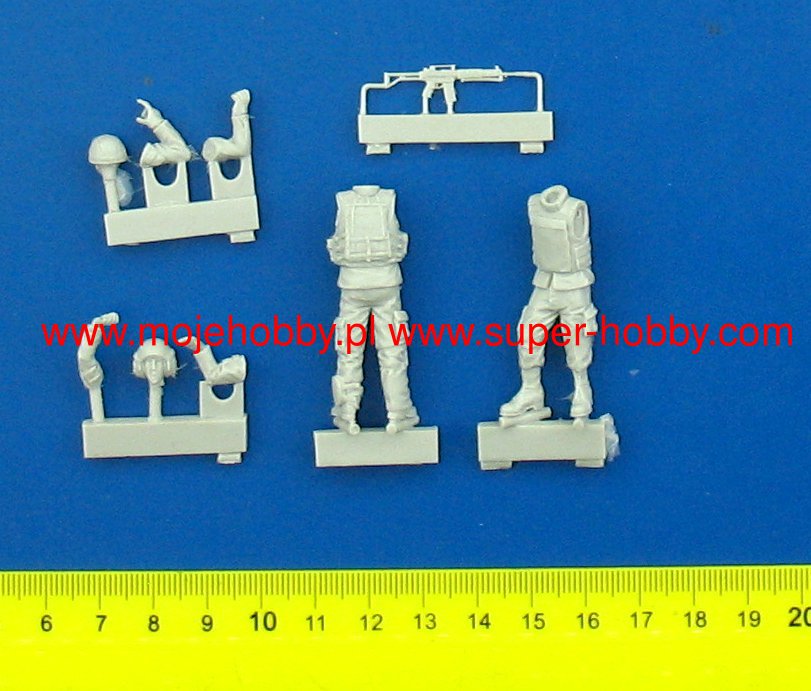
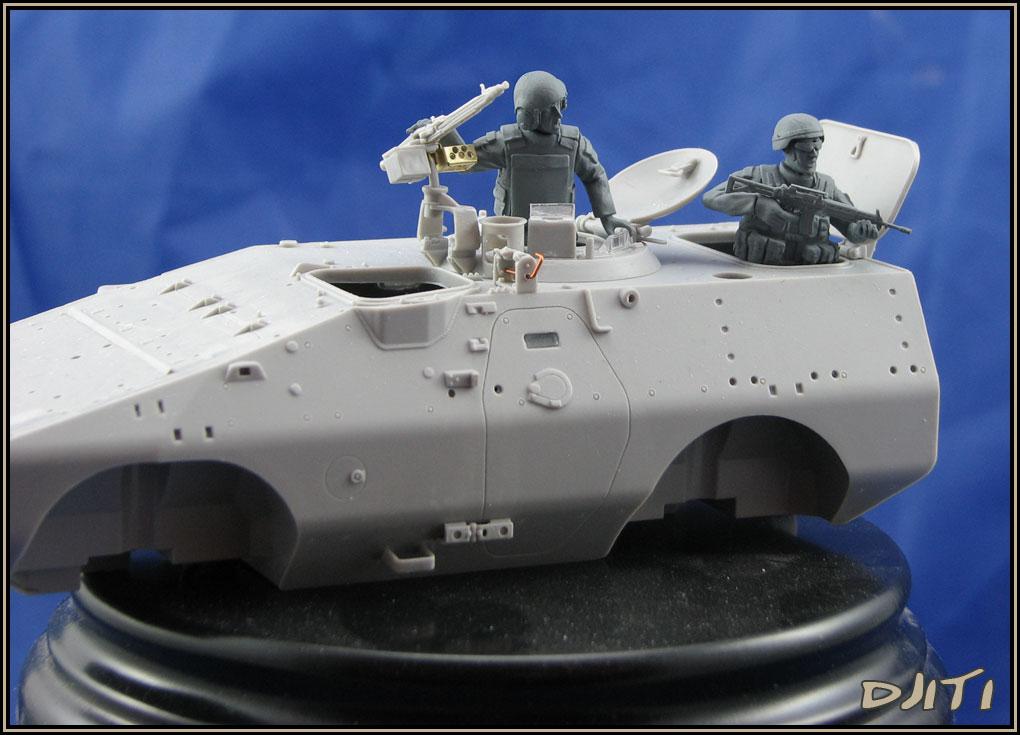
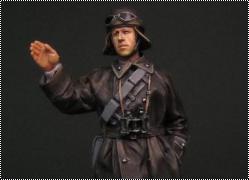
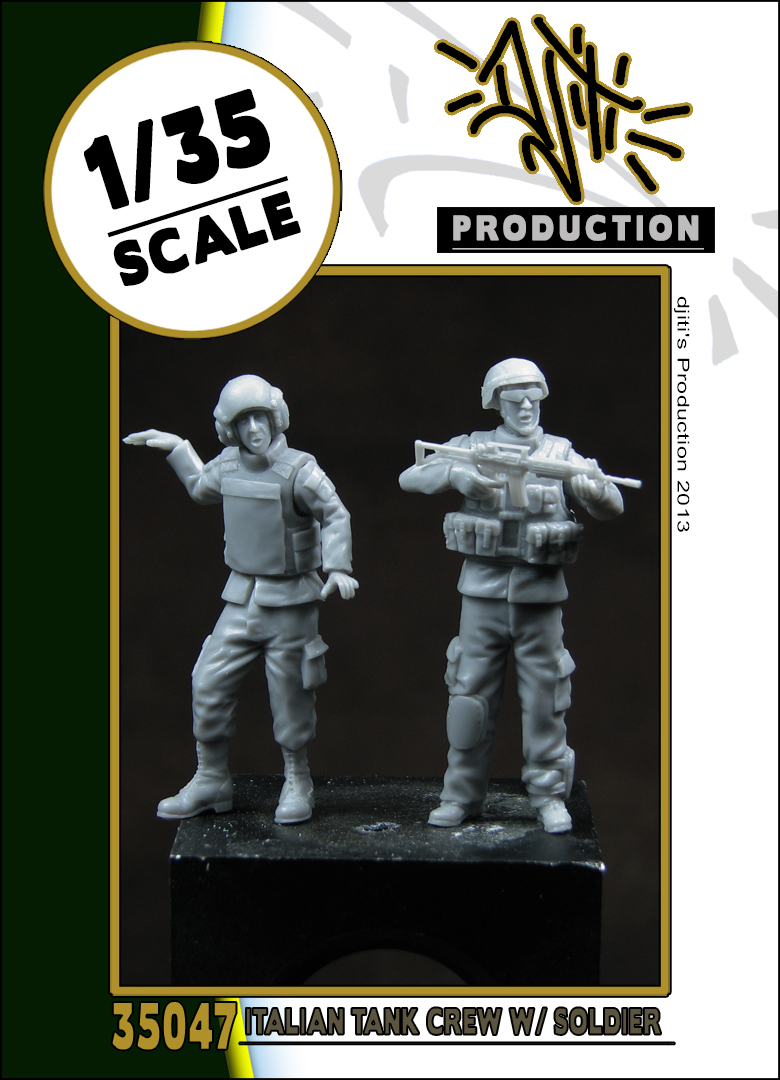
Italian Land Forces (owner. Esercito Italiana) were formed in 1861 and - as you can easily guess - are now the land component of the entire Italian armed forces. At present, Esercito Italiana is fully professional and composed only of volunteers. In 2004, about 115,000 soldiers served there. One of its main elements of a motorized and mechanized infantry unit. At the end of the Cold War, at the turn of the 1980s and 1990s, the Italian army had as many as 34 mechanized infantry battalions with M113 carriers. They were part of armored brigades (one per brigade) and mechanized brigades (three per brigade). In addition, it had 11 motorized infantry battalions (two per motorized division). However, after 1990, the Italian army, especially its infantry, underwent numerous reforms (in 1991, 1997, 2002, 2011 and 2013), which led to a reduction in its numbers, changes in the organization, but also the introduction of completely new vehicles to the line. . The 2013 reform assumed that the core of the Italian army would be two armored brigades, two mechanized brigades and four light brigades. Armored brigades have a single regiment (de facto battalion strength) of mechanized infantry, while mechanized units have three regiments (battalion strength) of mechanized infantry. It is assumed that at present Esercito Italiana has approx. 200 Dardo IFVs in the line, approx. 630 Wheeled Freccia IFVs and still over 1000 M113 armored personnel carriers. The main shooting weapons are the 5.56 mm Beretta AR 70/90 carbine and the Beretta ARX 160.Italian Land Forces (owner. Esercito Italiana) were formed in 1861 and - as you can easily guess - are now the land component of the entire Italian armed forces. At present, Esercito Italiana is fully professional and composed only of volunteers. In 2004, about 115,000 soldiers served there. One of its main elements is armored forces. At the end of the Cold War, at the turn of the 1980s and 1990s, the Italian army had 20 armored battalions consisting of Leopard 1A2 vehicles, 49 tanks each, 11 mechanized battalions consisting of Leopard 1A2 vehicles and M113 transporters. However, after 1990, the Italian army, including its armored forces, underwent numerous reforms (in 1991, 1997, 2002, 2011 and 2013), which led to a reduction in the size of the Italian army, changes in its structure and the introduction of new combat vehicles. The 2013 reform assumed that the core of the armored forces would be 2 heavy brigades (named after Ariete and Garibaldi) armed with Centauro wheeled tank destroyers, Ariete MBTs, Dardo IFVs and PzH2000 self-propelled howitzers. It is assumed that at present Esercito Italiana has around 200 Ariete tanks and around 400 wheeled Centauro tank destroyers in the line.

 Обязательно посетите этот сайт, там найдется много всего интересного.