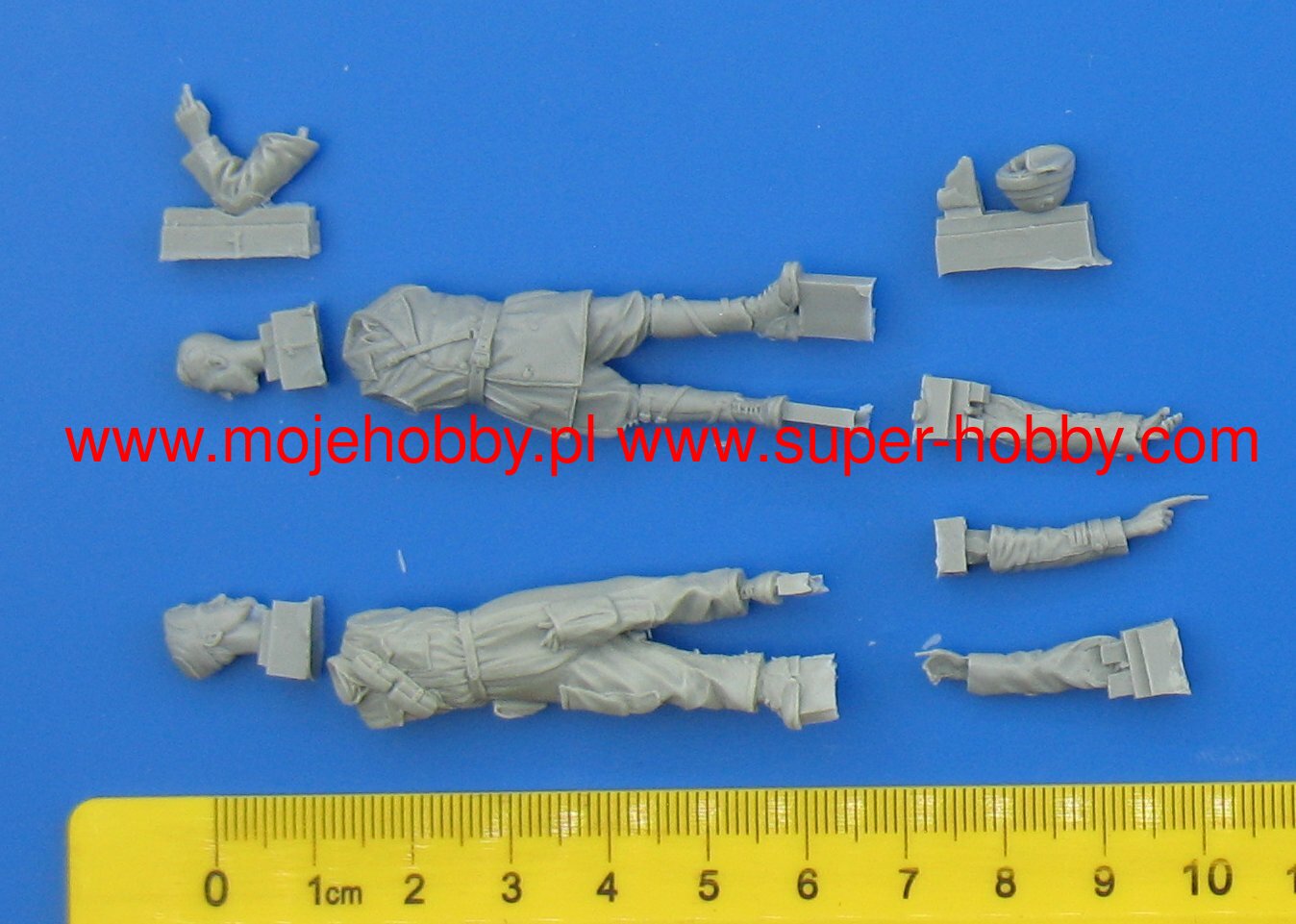
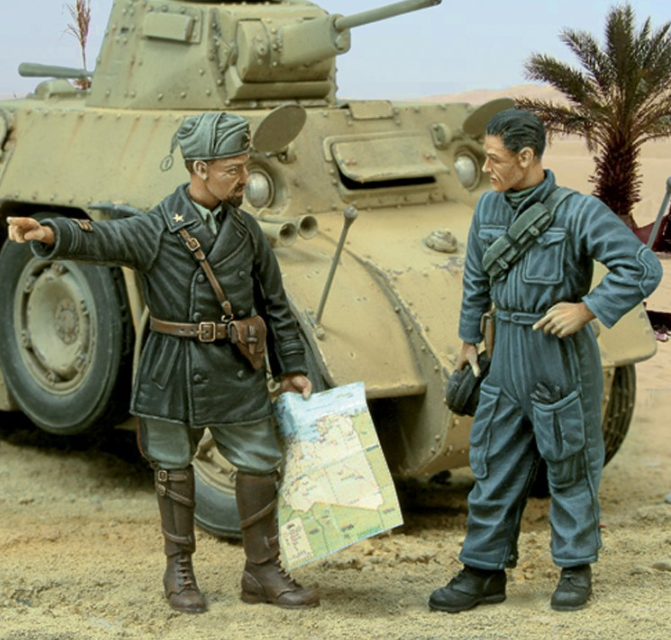
The Kingdom of Italy entered World War II in 1940, with an armed conflict with France and Great Britain. Of course, the Italian officer corps stood at the head of the Italian army of 59 divisions. In fairness it must be said that despite the exceptions, a significant part of it in the 1920s and 1930s was more concerned with the experiences of the Great War than considering what the future war might look like. Still, the main strength of the land forces was primarily infantry and artillery, even if steps were taken to motorize and mechanize the Italian army. It should also be added that probably several of the highest Italian commanders were aware of the lack of economic and military preparation of Italy for the war and were reluctant to the conflict with France and Great Britain. The Italian officer corps also had serious problems with the adequate motivation of its soldiers, despite a few glorious exceptions (Bersalier units or the Folgore division). Despite the generally gloomy image of the Italian officer corps, there were glorious exceptions, such as Gen. Giuseppe de Stefanis - a World War I veteran, commander of the 24th Infantry Division in 1941 during the fighting in Greece (where his division did very well), and later inter alia, the commander of mechanized units (eg 132 "Ariete" Panzer Division), and finally the Italian XX Corps during the fighting at El-Alamein.The Kingdom of Italy entered World War II in 1940, with an armed conflict with France and Great Britain. One of the most important types of Italian land forces were armored units, the roots and genesis of which date back to the end of World War I, and their quite intensive development took place in the 1920s and 1930s. It should be added here, however, that despite interesting theoretical and military considerations, the emphasis was placed in the Italian army on the development of light tanks, often called tankettes in Poland, such as the L3 / 33 or L3 / 35, which were, admittedly, mobile and easy to hide, but they were completely unsuitable for fighting the enemy vehicles. It was only the experiences of the civil war in Spain (1936-1939) that made it clear and led to some adjustments in the development of Italian armored weapons, and in 1939 it was decided to create the first real armored divisions - these were the 131st "Centauro" Panzer Division and the 132nd Panzer Division "Ariete". At the time of their formation, these divisions consisted of around 7,440 soldiers each, and their main armament was the CV33 and CV35 light tanks and a number of M11 / 39 vehicles. The divisions consisted of an armored regiment, a regiment of bersaliers on motorcycles and trucks, and weapons of support subunits - anti-tank, anti-aircraft and sapper units. It should be added that in the period 1940-1943, the Italian army had armored equipment inferior to the quality and combat values of the German or British counterparts. In some departments, training was also inadequate. However, it is difficult to accuse Italian tankers of extreme defeatism or mass acts of cowardice, because during the campaign in North Africa - after learning some German tactical solutions - they turned out to be valuable soldiers.

 Обязательно посетите этот сайт, там найдется много всего интересного.