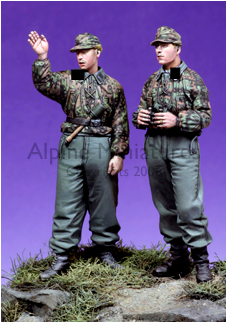
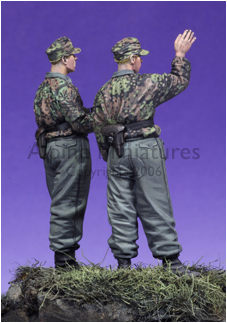
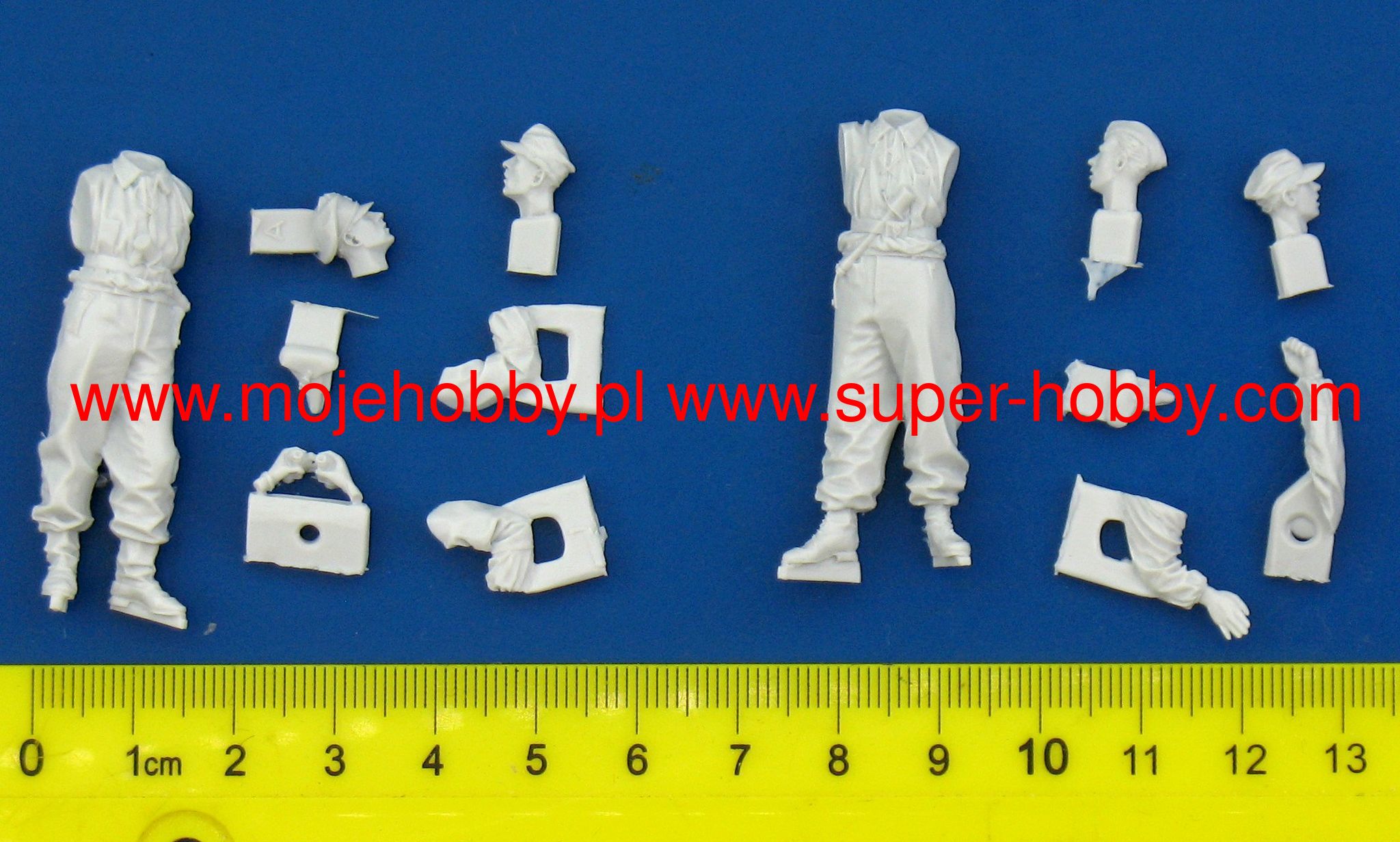
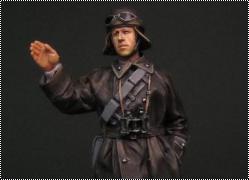
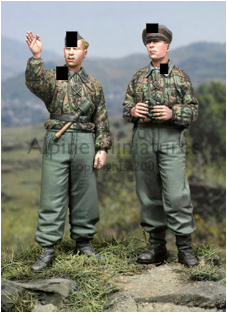
The development of German armored weapons, including armored cars and armored vehicles, was clearly regulated and hampered by the limitations of the 1919 Treaty of Versailles. This state of affairs changed radically after the Nazis took power in 1933 and the launch of a virtually unlimited arms program. As a result, in 1935, the first successful four-wheeled armored vehicles Sd.Kfz.221 / 222/223 began to enter the line, and shortly afterwards the vehicles from the Sd.Kfz.231 family on an eight-wheeled chassis. At the same time, efforts were made to withdraw from the line and the production of vehicles also designated as Sd.Kfz.231, but on a six-wheeled chassis, was limited. All these vehicles turned out to be very useful already in the first campaigns of World War II, especially in reconnaissance activities, but also as radio communication or command vehicles in their specialized versions. In the course of World War II, of course, the German army introduced new armored cars to the line, of which the Sd.Kfz.234 deserves special attention. It is worth adding that German armored cars were used primarily in armored divisions, and from 1943 also in armored grenadier divisions, but also in infantry divisions in their reconnaissance divisions.Panzergrenadier is a German term for a formation of panzer grenadiers, i.e. infantry units trained to fight in close cooperation with their own tanks. This term was officially used in 1942, when infantry divisions were renamed grenadier divisions and motorized infantry divisions into panzer grenadier divisions. It is worth adding that in the years 1937-1942, the Schützen Regiment was used to describe the infantry regiments serving in armored units. Theoretically, the basic equipment of armored grenadier divisions was to be armored half-tracked transporters, especially Sd.Kfz.251, but due to insufficient production, these infantry were often transported by trucks. As a standard, an armored grenadier division consisted of three infantry regiments, two battalions in each regiment and numerous support units, including anti-tank, anti-aircraft, sapper and communication units. Self-propelled guns, such as the StuG III, were often used in these formations. It is worth adding that the armored grenadier divisions were formed not only in the Wehrmacht, but also in the Waffen SS - for example the Totenkopf Division or the Hohenstaufen Division.

 Обязательно посетите этот сайт, там найдется много всего интересного.