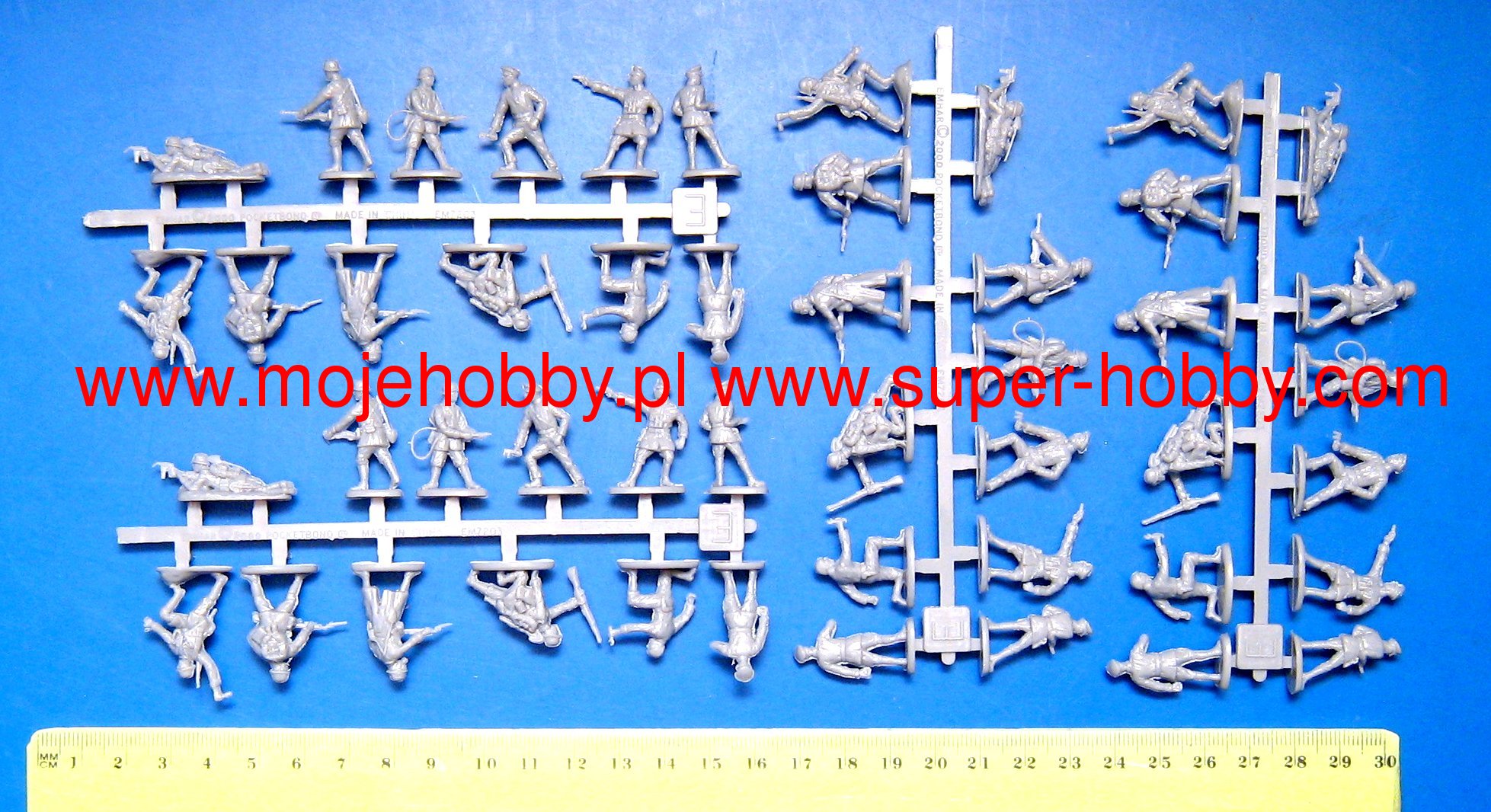
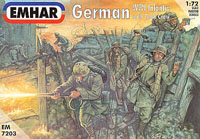
At the time of the outbreak of World War I, the German army, like any other European army of that time, did not have any tanks. However, in the course of this conflict, Germany managed to overtake France, especially Great Britain, which already in 1916 introduced the first tanks on a large scale at the end of the Battle of the Somme. For the German army, the appearance of Mark IV tanks was quite a surprise, which became a catalyst for the development of their own armored forces. It also led to the design of the first German tank, the A7V, which had a crew of at least 18 people! The German army, however, still treated this type of weapon of secondary importance, and at the same time was aware that the economic and economic opportunities of Germany did not allow for the production of tanks in large numbers. For this reason, it first used armored weapons on a larger scale only at the beginning of 1918, during the so-called Ludendorff offensives on the Western Front. It is worth adding that not only the native A7V was used in its course, but also many captured tanks - especially British ones.At the start of World War I, in August 1914, the army of imperial Germany was considered the best and most efficient in the Old Continent. Such a conviction resulted mainly from the fame of the victories won in the course of the wars with Austria in 1866 and with France in the years 1870-1871. Also, many organizational solutions used at that time in the Prussian army, and later in the German army (e.g. strategic railway lines or mobilization techniques) were copied in other European countries. As in the French and Russian armies, the largest number of armed forces in the German army in 1914 was infantry. The German infantryman at that time was his main armament with the successful 7.92mm Mauser Gewehr 98 rifle, and on his head he wore the famous pickelhaub - so mercilessly used as a symbol of German militarism in the caricature of the Entente countries. It is worth adding that the German infantry uniform was much less colorful than its French counterpart. At the outbreak of the Great War, the German corps consisted of the headquarters, 2 infantry divisions, a heavy artillery squadron (16 150 mm caliber howitzers), a communications battalion, a searchlight company and an air company. The infantry division in turn consisted of two brigades, each of them two infantry regiments. On the other hand, a single infantry regiment consisted of 3 battalions and a machine gun company of 6 heavy machine guns. It is worth adding that the infantry division was supported by an artillery brigade of 72 guns. Of course, in the course of World War I, the German infantry underwent far-reaching changes. First of all, a steel helmet (German Stahlhelm) was introduced into the weaponry, which, with minor changes, survived in the German armed forces until the end of World War II! Hand grenades, gas masks and light machine guns (German: leichte Maschinengewehr - abbreviated as lMG) also began to be used on a large scale. Branches such as Stosstruppen also appeared.

 Обязательно посетите этот сайт, там найдется много всего интересного.