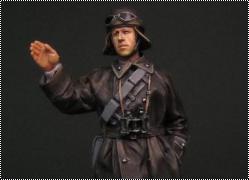
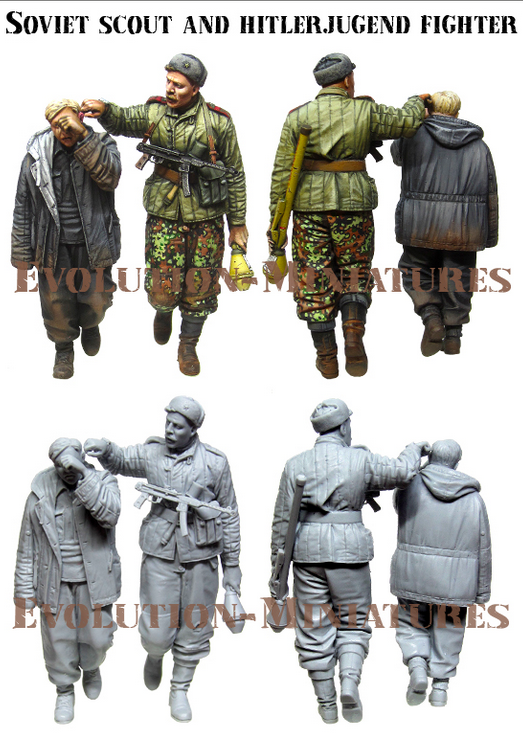
The Hitler Youth (abbreviated: HJ) is a German Nazi youth organization of the NSDAP party that was formed in 1922 under the name Jungsturm. The rapid development of the organization took place in the early 1930s, especially after 1933, when Baldur von Schirach was the leader of HJ, and considerable funds were allocated from the state budget for its development. From March 1939, under a special law, all young male Germans aged 10 to 18 were to join the Hitler Youth. In the same year, the Hitler Youth had over 7.7 million members! From 1940, when Artur Axmann became the leader of HJ, the organization began to transform into auxiliary and rear units of the German armed forces, and underage Germans from HJ acted as part of air defense or helped to remove damage caused by Allied air strikes. From 1943, the Hitlerjugend became a de facto military reserve, and in June of the same year, the 12th SS Panzer Division of the Hitlerjugend was formed based on the youth from HJ. In the last months of the war, youth from HJ often fought on the front lines, and during the Berlin operation (1945) even children aged 12-14 were sent to the front.In the 1920s and - especially - in the 1930s, the Red Army underwent a rapid development in terms of increasing its posts, as well as increasing saturation with technical weapons, primarily armored weapons. Still, the infantry was the primary and numerically largest element of the Red Army. The intensive quantitative development of this type of weapon began at the turn of 1929/1930. In 1939, even before the aggression against Poland, the Soviet infantry was formed into 173 divisions (so-called rifle divisions), most of which were grouped in 43 corps. It is worth adding that after the September campaign in 1939, this number increased even more. The Soviet rifle division in 1941 consisted of three rifle regiments (three battalions each), an artillery regiment, after an anti-tank and anti-aircraft artillery division, as well as reconnaissance and communication battalions. In total, it numbered about 14,500 people. However, by 1945 this position underwent significant changes, leading to a division of approximately 11,500-12,000 people, consisting of three infantry regiments, an artillery brigade consisting of three regiments, a self-propelled artillery squadron and many support units, including anti-tank, anti-aircraft weapons or communications. The saturation of infantry units with machine weapons has also increased significantly - for example with the submachine guns APsZ 41, and later APsZ 43.

 Обязательно посетите этот сайт, там найдется много всего интересного.